
Last updated November 20, 2026
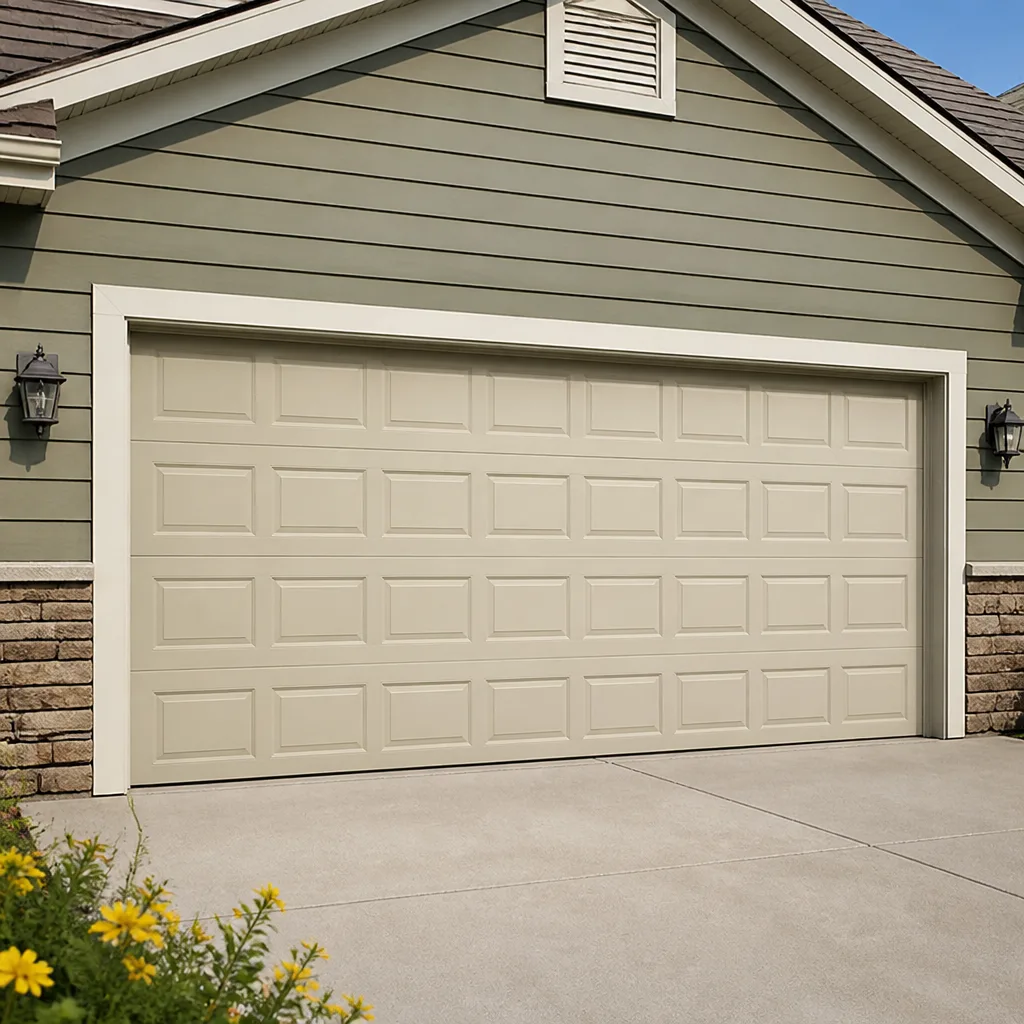 Raised-panel steel
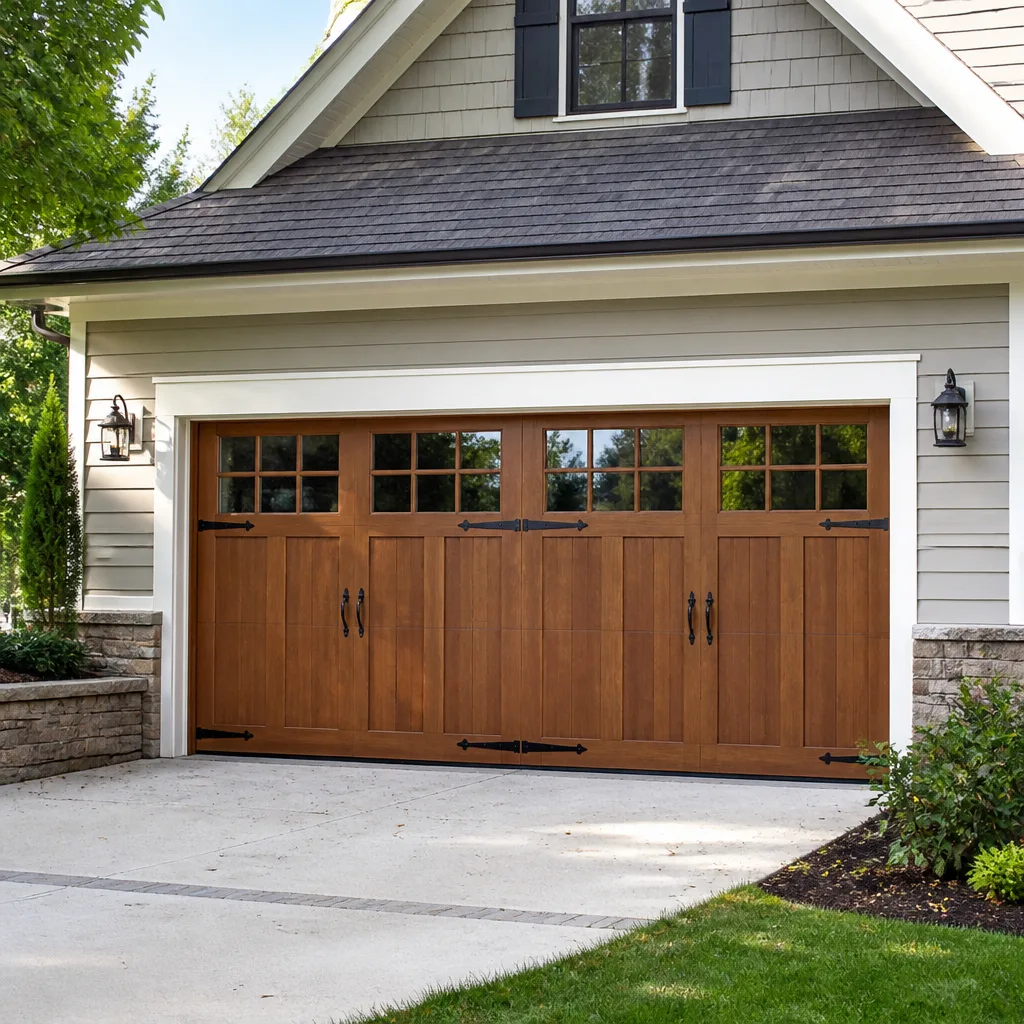 Carriage house
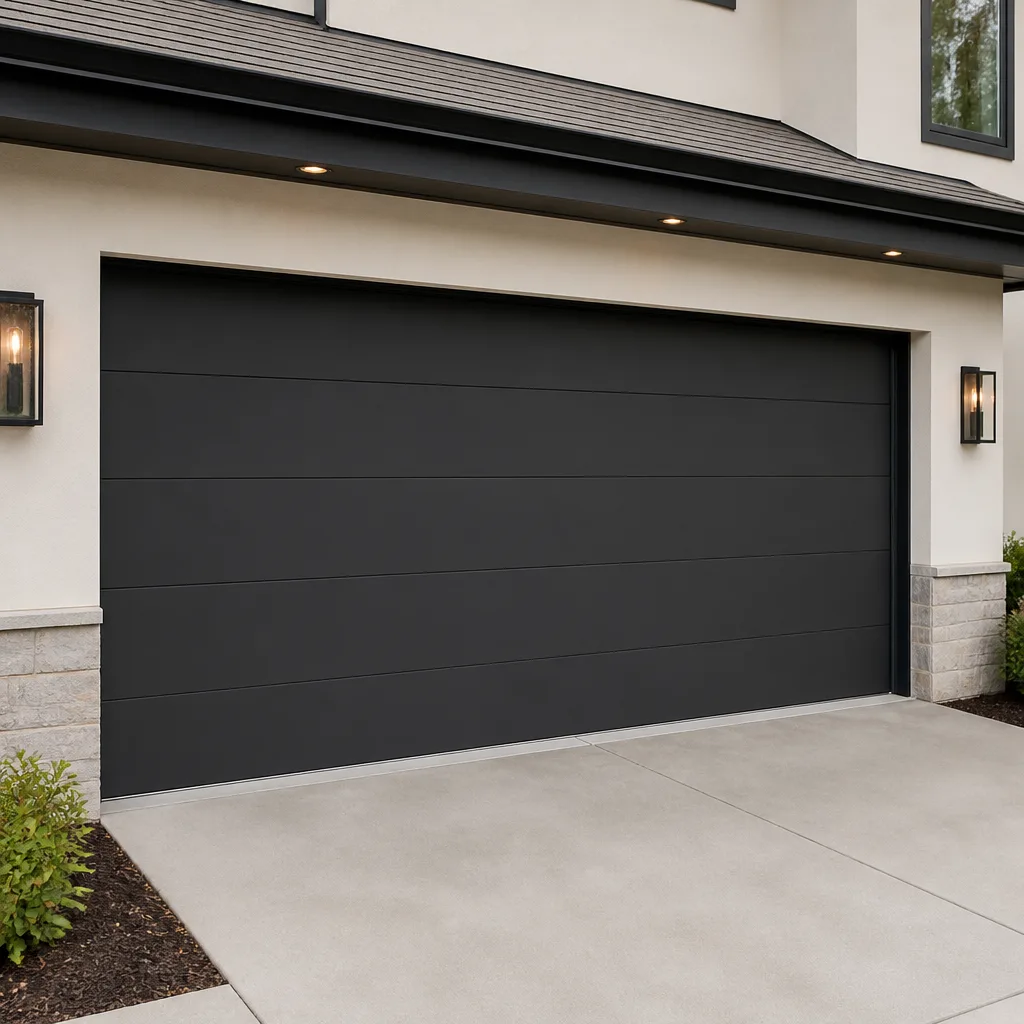 Modern flush
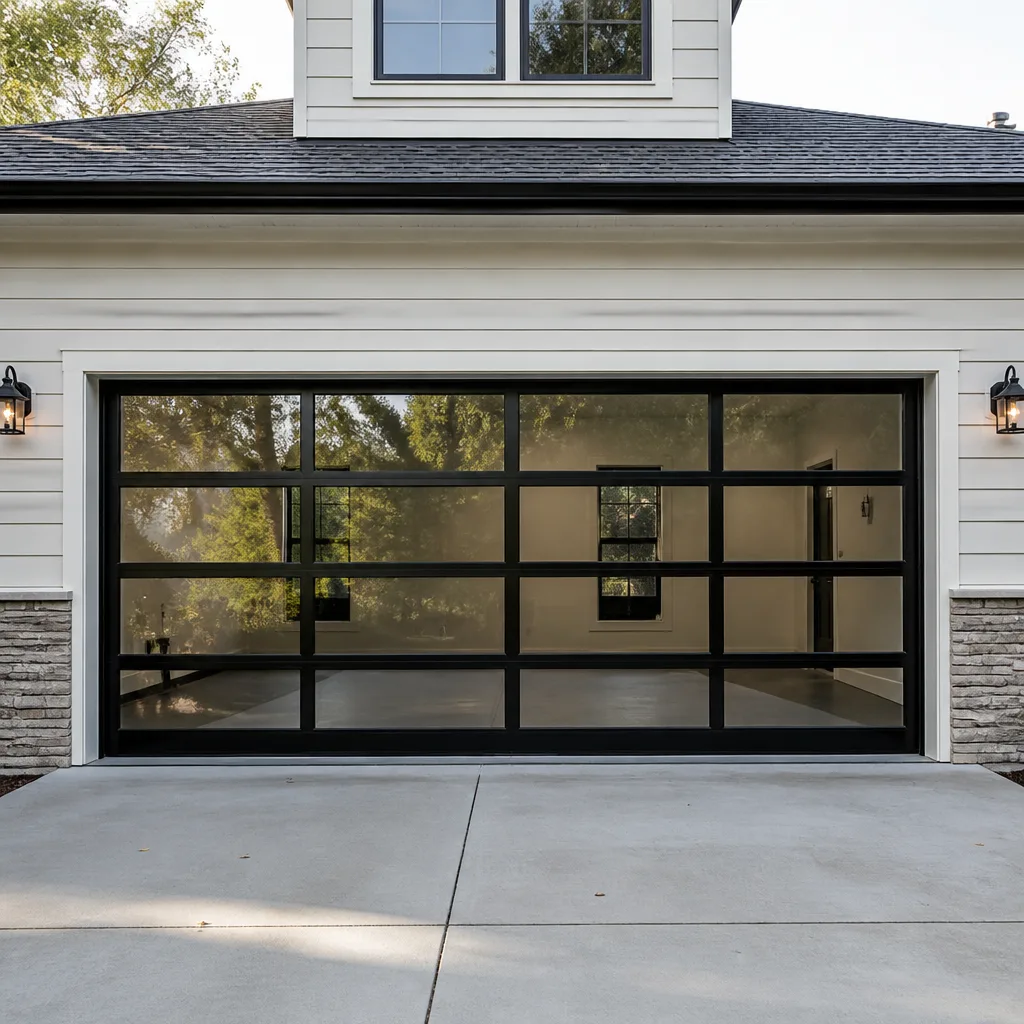 Full-view glass
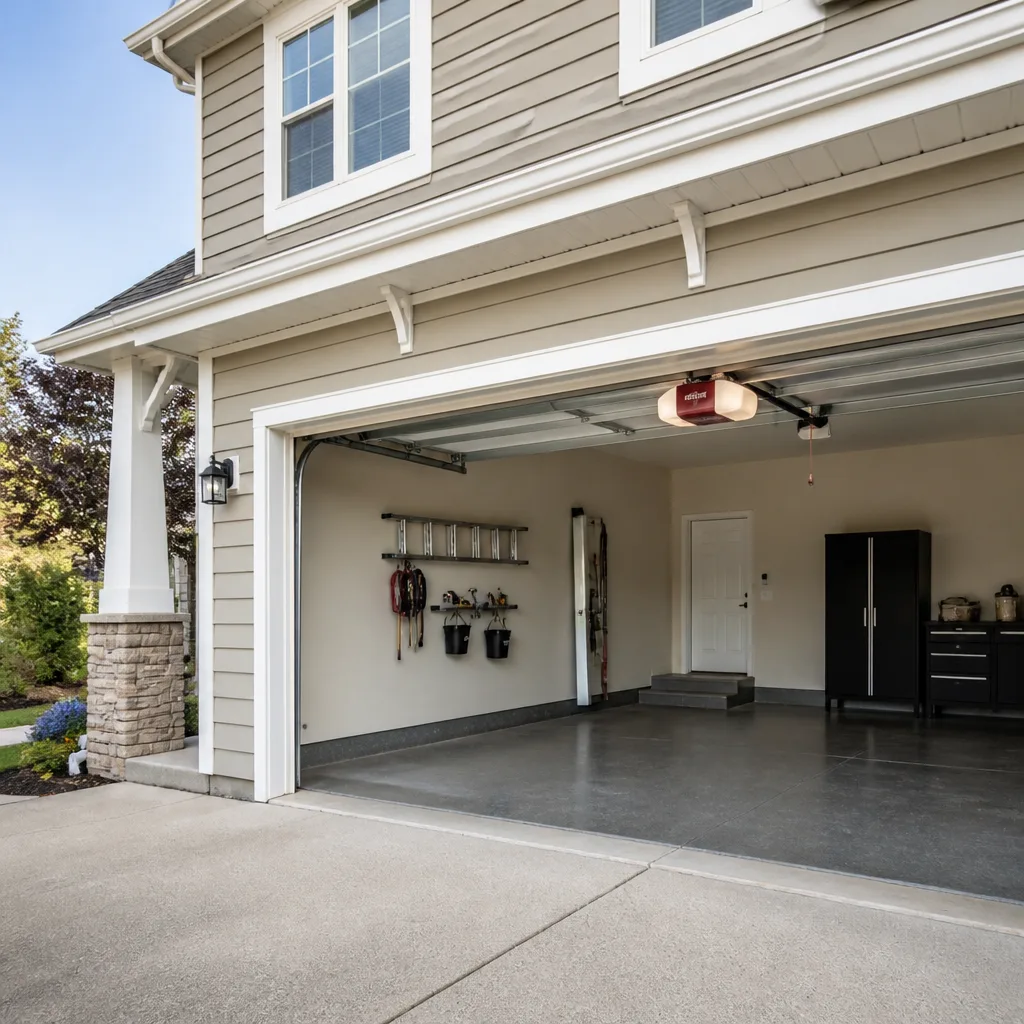 LiftMaster openers
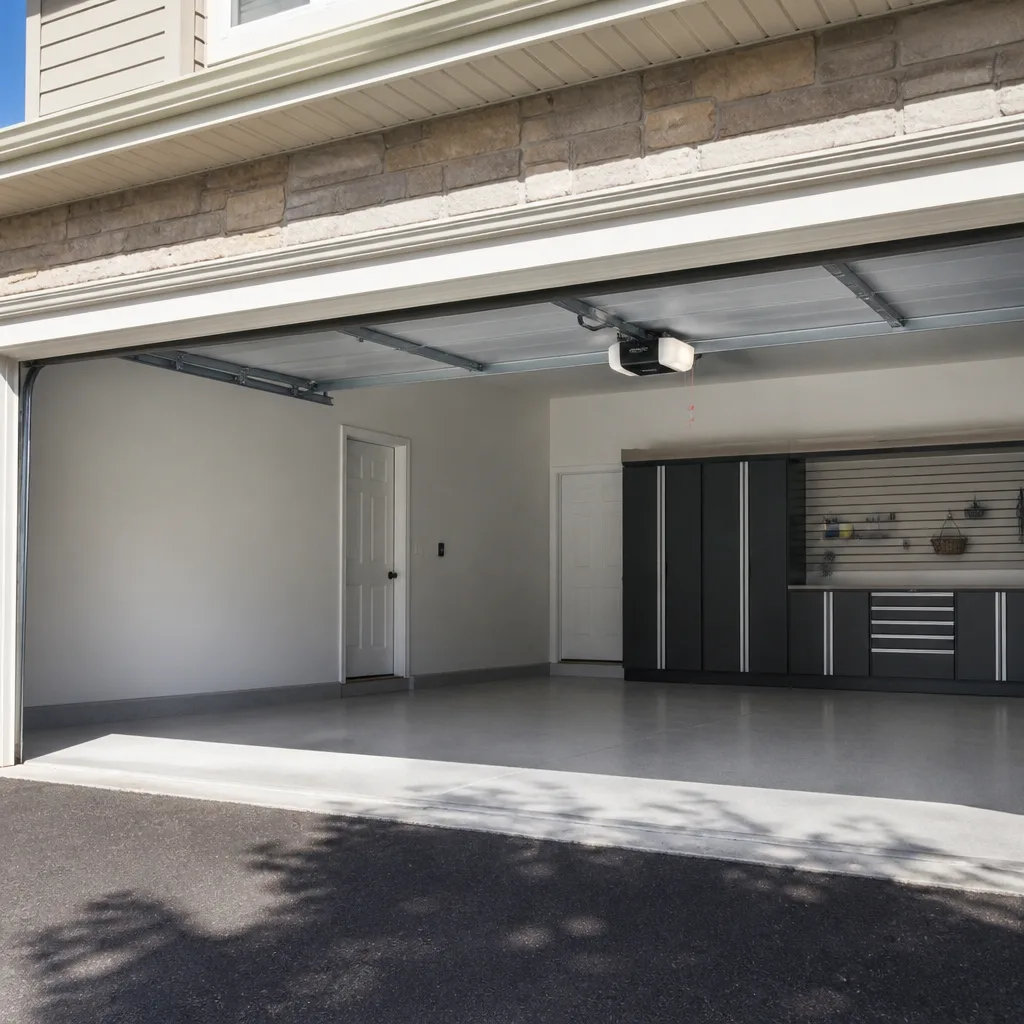 Chamberlain openers
Full 25-point door and opener safety check with every visit - springs, cables, rollers, tracks, and your LiftMaster or Chamberlain opener included
You get a price before we start. It does not change when the pro arrives.
Get your free estimateThe Complete Guide to Garage Doors in Greenacres
Most garage door guides are written for places where the biggest enemy is snow. In Greenacres, it’s humidity, UV degradation, and the wind-load tables that Palm Beach County building officials actually check before a door is approved. That difference matters more than most homeowners realize. A door that performs beautifully in Ohio can fail early here, and a cheap opener that’s fine up north can struggle through a Florida summer. This guide walks through what actually holds up in Greenacres: how wind-load ratings work on a door you’re buying or replacing, which materials survive the heat and moisture, how insulation ratings get oversold, and what to check on your opener to protect it from the lightning that rolls through this part of the state. You’ll also learn how to read a product approval number and what to do when something breaks.
Quick Answer
Garage doors in Greenacres need to meet Florida Building Code wind-load requirements for Palm Beach County, and in practice that means choosing a door with a valid product approval number for your opening size, plus hardware rated for the local wind zone. Beyond code, the local climate favors materials that resist humidity and UV, openers paired with whole-home surge protection, and hardware that gets checked for corrosion more often than in drier parts of the country. Most residential failures we see in Greenacres come down to springs, openers, and door track alignment, and most of those are repairable rather than requiring a full replacement.
Styles & brands we work with
- Raised-panel steel
- Carriage house
- Modern flush
- Full-view glass
- LiftMaster openers
- Chamberlain openers
Table of Contents
- Florida Building Code and Wind Load in Palm Beach County
- Why Steel and Aluminum Corrode Differently Near the Coast
- The Insulation R-Value Trade-off in a Hot Climate
- Opener Compatibility and Surge Protection in a Lightning Corridor
- How to Read a Product Approval Number
- A Maintenance Routine That Makes Sense Here
- Repair or Replace: How to Decide
- Brands You’ll Find on Greenacres Homes
Florida Building Code and Wind Load in Palm Beach County
If you’re buying or replacing a garage door in Greenacres, the first thing to understand is that Palm Beach County enforces the Florida Building Code with wind-load requirements specific to this region. A garage door isn’t just an opening in the wall; it’s a large, lightweight panel that can become the weakest point in a home’s wind envelope. Doors sold without a valid approval for this area are a problem at inspection, and in a storm they’re a real risk.
What this means practically:
- The door must carry a product approval that covers the wind zone and design pressure for your specific opening width and height.
- Reinforcement hardware (struts, hinges, brackets) has to match what the approval specifies, not be swapped for generic parts.
- Installers must follow the manufacturer’s anchoring instructions exactly, since the approval is tied to that method.
- If you’re replacing an older door, the new one generally needs to meet current requirements, not the standard that applied when the home was built.
Before you commit to any door, ask to see the approval documentation and confirm it lists your opening dimensions. A door approved at a narrower width isn’t valid at yours. For questions about your specific home, the Palm Beach County building department is the authority, and it’s worth a call before you buy rather than after.
The other half of the code picture is that wind-rated garage doors need their tracks and hardware in good condition to perform as designed. A door that’s approved on paper but has bent tracks or missing bolts isn’t meeting the intent. That’s one reason regular garage door repair checks matter here, not just in storm season.
Why Steel and Aluminum Corrode Differently Near the Coast
Greenacres sits inland enough that salt fog isn’t the constant presence it is on the barrier islands, but humidity and warm air still drive corrosion on metal hardware throughout the year. The gap between how steel and aluminum doors age here is bigger than you’d expect, and it comes down to how each metal reacts to moisture.
Steel doors are the most common choice for residential homes, and for good reason. They’re strong, they hold their finish well when the paint is intact, and they can carry the wind-load reinforcement needed here. The catch is that any scratch or chip in the paint is a place where moisture starts working on exposed steel. Left alone, those spots rust and spread. Steel doors in Greenacres benefit from a quick touch-up on chips, ideally before the rainy stretch of summer sets in.
Aluminum doors don’t rust the way steel does, but they corrode differently. Aluminum forms a dull oxide layer that protects the metal beneath, which sounds like a good thing until you see what happens at joints and fasteners. The real weak point on any aluminum door is where aluminum meets a steel fastener or hinge, because the two metals react and the joint corrodes faster than either metal alone. Stainless or coated fasteners help, and checking them periodically matters in this climate.
In our experience working on doors across Greenacres, the doors that age best here are the ones where the homeowner noticed small corrosion spots early and dealt with them. That’s true for Clopay steel panels and for aluminum doors alike. The takeaway isn’t to avoid one metal or the other; it’s to inspect hardware, hinges, and the bottom of the door where moisture collects, and to treat any spot of corrosion as something to address before it spreads.
The Insulation R-Value Trade-off in a Hot Climate
Insulated garage doors are sold hard in Florida, and for some homes they genuinely help. For others, they add cost without much payoff. The difference comes down to whether your garage is attached and conditioned-adjacent or detached and separate from the living space.
Here’s how to think about it:
- If your garage shares walls or a ceiling with living space, a little insulation can slow heat transfer into the house and ease the load on your air conditioning.
- If your garage is detached, or the door faces a space that’s not cooled, insulation mostly affects the temperature inside the garage itself, not your home’s energy bill.
- A single-layer steel door radiates heat, and on a west-facing opening in Greenacres the door surface gets hot enough that you can feel it. A double-layer door with a polystyrene core cuts that noticeably.
- Higher R-values cost more, and past a certain point the extra insulation doesn’t translate into meaningful savings in a garage that isn’t cooled.
Where insulation gets oversold is when it’s pitched purely as an energy saver. In a hot climate like ours, the more reliable benefit of an insulated door is comfort and noise, not a dramatic drop in your power bill. If a salesperson promises big HVAC savings from an insulated garage door alone, ask how that math works for your specific house.
One more point: the insulation core and the door’s strength are separate questions. A door has to meet wind-load requirements regardless of how well insulated it is, so don’t let an insulation upgrade distract from checking the approval and reinforcement on any door you consider.
Opener Compatibility and Surge Protection in a Lightning Corridor
Florida is one of the most active lightning regions in the country, and garage door openers are among the first things to fail after a nearby strike. The circuit boards inside modern openers, whether it’s a Chamberlain, a Genie, or any other brand, are sensitive to power surges that ride in through the wiring. This is one of the most overlooked parts of garage door ownership here in Greenacres.
Whole-home surge protection is the single most effective thing you can do to protect an opener. A surge protector at the panel catches spikes before they reach the opener’s board. If you don’t have one, having an electrician add it is worth the conversation. Cheaper plug-in protectors at the outlet help, but they’re a partial measure compared to panel-level protection.
Beyond surge protection, opener compatibility matters when you’re repairing or replacing one:
- Check what brand the home already has. Staying with the same brand or platform keeps existing remotes, keypads, and smartphone apps working. Switching brands can mean replacing all the accessories.
- Match the opener’s lifting capacity to the door. A heavier, insulated door needs an opener rated for it. A chain-drive opener sized for a light door will strain and fail faster.
- Decide on drive type based on location. Jackshaft openers suit garages with low ceiling clearance or side-mounted torsion; belt-drive is quieter for bedrooms above the garage.
- Confirm smart features work on your network. Most modern openers connect via Wi-Fi or a hub, and setup varies by brand. Ask before you buy if reliability matters to you.
When an opener fails after a storm, the fix is often a logic board or a capacitor rather than a whole new unit. If your opener is behaving strangely after a storm, calling early is smart – the diagnosis is usually straightforward, and we answer 24/7.
How to Read a Product Approval Number
A product approval number is the paper trail that tells an inspector the door you’re installing is rated for your opening. Learning to read one takes five minutes and saves a lot of headaches.
In Florida, products are typically approved through the Florida Building Commission’s product approval system, and the documentation lists the product, the manufacturer, and the conditions under which it’s approved. What to check:
- Find the approval number on the door’s label or documentation. It usually looks like a series of letters and numbers identifying the evaluation.
- Confirm the product name and model match what you’re buying. Approvals are tied to specific models, not just manufacturers.
- Check the approved size range. The approval will list maximum width and height. Your opening must fall within that range.
- Note the required reinforcement. Some approvals require specific struts or hardware. Confirm those are included and installed.
- Verify the wind zone or design pressure matches Palm Beach County. The approval should state the region or pressure rating it covers.
Where homeowners get tripped up is buying a model approved at one size and installing it at a larger opening just because the same model comes in a bigger version. The bigger version may need different reinforcement or a separate approval. If you’re unsure, the building department can confirm what’s required, and any reputable installer should be able to produce the approval for the exact door they’re installing.
A Maintenance Routine That Makes Sense Here
A little routine care goes a long way in Greenacres, where heat, humidity, and storm seasons take a toll on hardware. This is a homeowner-level inspection, not a repair manual; anything that involves springs or electrical work should go to a professional.
- Look at the door’s painted surface for chips or scratches, and touch them up before rust starts.
- Check hinges and fasteners for corrosion or looseness. Tighten what’s loose and note any rust.
- Lubricate moving metal parts like hinges and rollers with a garage-door-appropriate lubricant, keeping it away from the tracks’ traction surfaces.
- Listen to the door in motion. A grindy or scraping sound usually means a roller or track issue developing.
- Test the safety reversal. Put an object in the door’s path and confirm it reverses. This is a basic safety check that shouldn’t be skipped.
- Look at the bottom seal. A worn seal lets in water and pests, and it’s a common source of drafts.
- Have the springs and cables inspected by a professional periodically, since these are the parts that carry the most tension and the greatest risk.
If the door stops mid-travel, reverses for no reason, or the opener light flashes in a pattern you don’t recognize, those are signs to call someone rather than keep cycling the door. Electrical components and tensioned hardware are the two places in this system where a DIY attempt can turn into an injury.
Repair or Replace: How to Decide
Most garage door problems we see in Greenacres are repairable. Replacing a whole door because an opener failed or a spring broke is rarely necessary, and it’s often the most expensive path forward when a targeted repair would do. The decision usually comes down to a few questions.
- Is the door itself structurally sound? Dents, bent panels, and rust-through are door problems. A broken spring or dead opener is not.
- How old is the hardware? Older doors may be due for a larger refresh if multiple components fail in a short window, but that’s different from a single failure.
- Does the door meet current wind-load requirements? If your door predates the local requirements and you’re renovating anyway, upgrading makes sense. If it’s fine and only the opener has failed, repair is the better answer.
- What’s the cost trade-off? A repair that returns the door to working order is usually a fraction of a full replacement. A written estimate will show you the comparison.
The honest answer is that a repair-first approach saves money in most cases. A specialist who works on doors and openers only has no reason to push a replacement when a repair will restore the door. That’s the way we look at it: fix it first, replace only when necessary.
Spring failures are a common example. A broken spring doesn’t mean the door is done, and garage door spring repair restores the door in most cases. The spring is the part doing the lifting, and once it’s replaced the door works like before.
Brands You’ll Find on Greenacres Homes
Homes across Greenacres have a wide mix of garage door and opener brands, and a specialist should work on whatever is already on your home rather than steering you toward a particular brand. We see Clopay steel doors on many newer homes, Amarr doors on others, and a full range of openers from Chamberlain, Genie, and larger brands like LiftMaster, Craftsman, Wayne Dalton, and Raynor.
What that brand mix means for you:
- Your existing remotes and accessories usually keep working if the repair uses parts compatible with the current opener.
- Brand-specific quirks matter in diagnosis. A Genie opener’s electrical fault looks different from a Chamberlain’s, and knowing the platform speeds up the fix.
- Door hardware is often brand-agnostic. Hinges, rollers, and springs can be matched to the door’s specifications regardless of manufacturer, as long as the load rating is correct.
This is also why calling a general handyman for a garage door problem can go sideways. A specialist carries the knowledge of how each brand fails and what to check first. If your opener is a Genie and the problem is the wall control, that’s a different diagnosis than if the same symptom appears on a Chamberlain. For garage door opener repair, working on every major brand is the day-to-day reality of the job.
Common Mistakes to Avoid
- Buying a door without checking the product approval for your opening size. An approval for a different width or height isn’t valid at yours, and an inspector will catch it.
- Assuming insulation will slash your energy bill. In a garage that isn’t cooled, a high R-value door mostly affects garage temperature and noise, not your home’s cooling costs, so don’t pay a premium expecting HVAC savings.
- Skipping whole-home surge protection. In a lightning-prone part of Florida, an unprotected opener board is a likely casualty of a nearby strike. Protection costs far less than a replacement board.
- Ignoring small rust or corrosion spots. In Greenacres humidity, a chip in the paint on a steel door will spread if left alone. Touch-up takes minutes; a rusted bottom section is a bigger repair.
- Replacing the whole door when only the opener or spring failed. A dead opener or a snapped spring is a component failure. The door itself is usually fine, and a repair is the smarter spend.
- Trying to adjust springs or cables yourself. These parts hold enough tension to cause serious injury. Leave them to a trained technician, no exceptions.
- Switching opener brands without accounting for remotes and keypads. A different platform can mean replacing every remote and accessory in the house.
See the difference
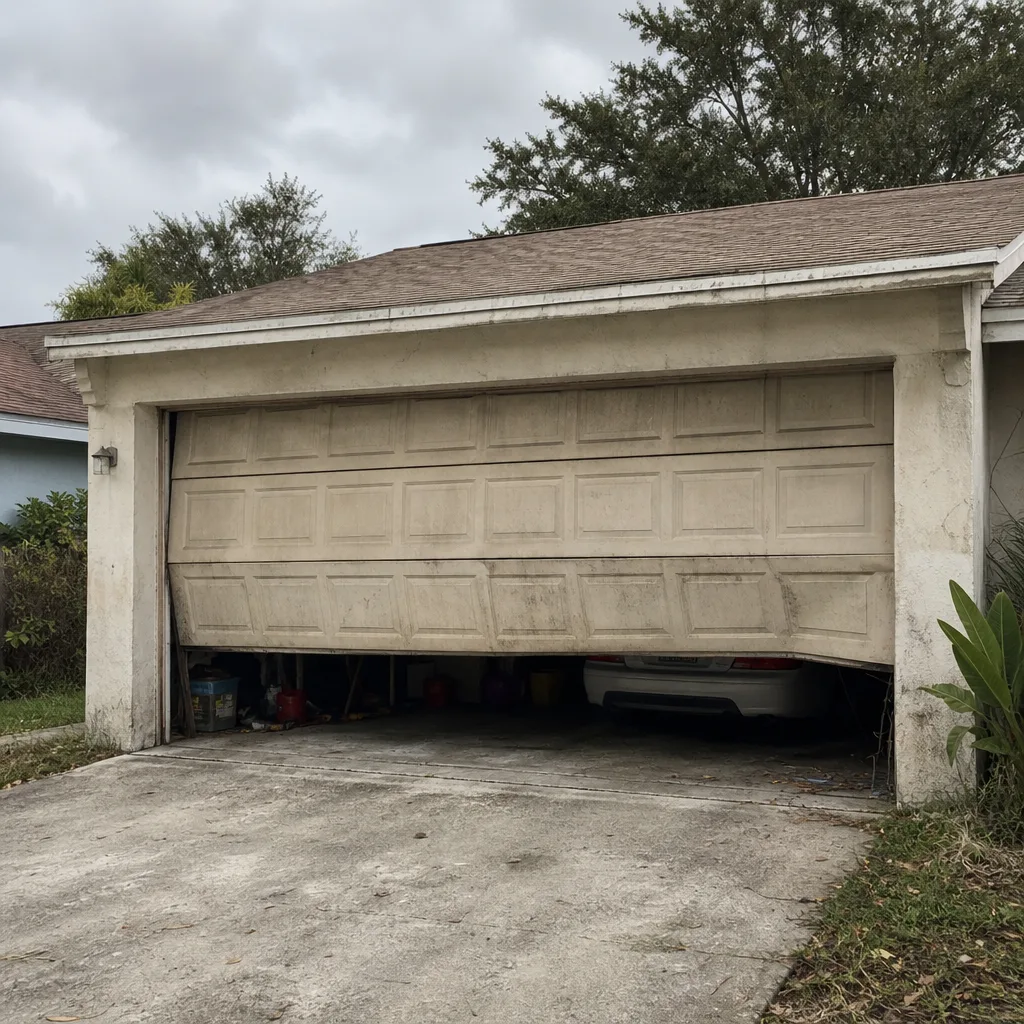 Before
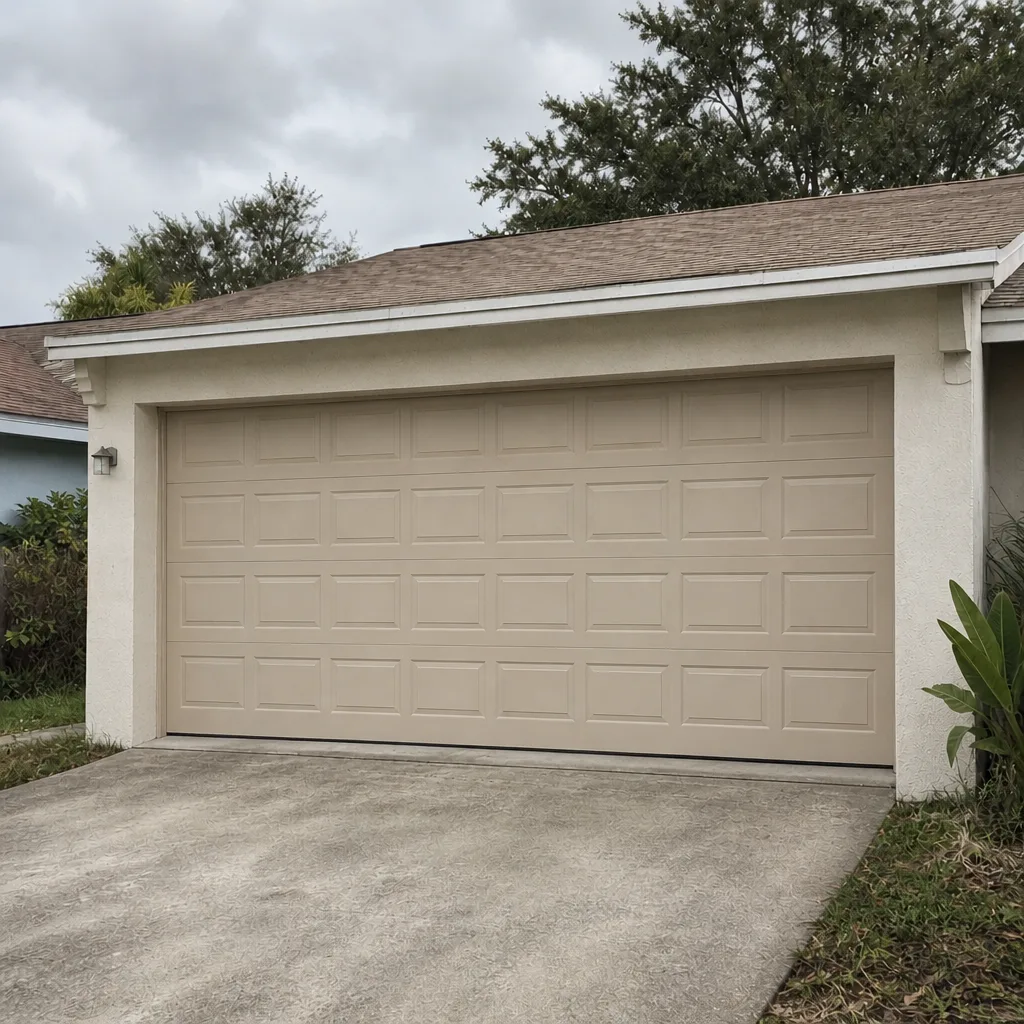 After
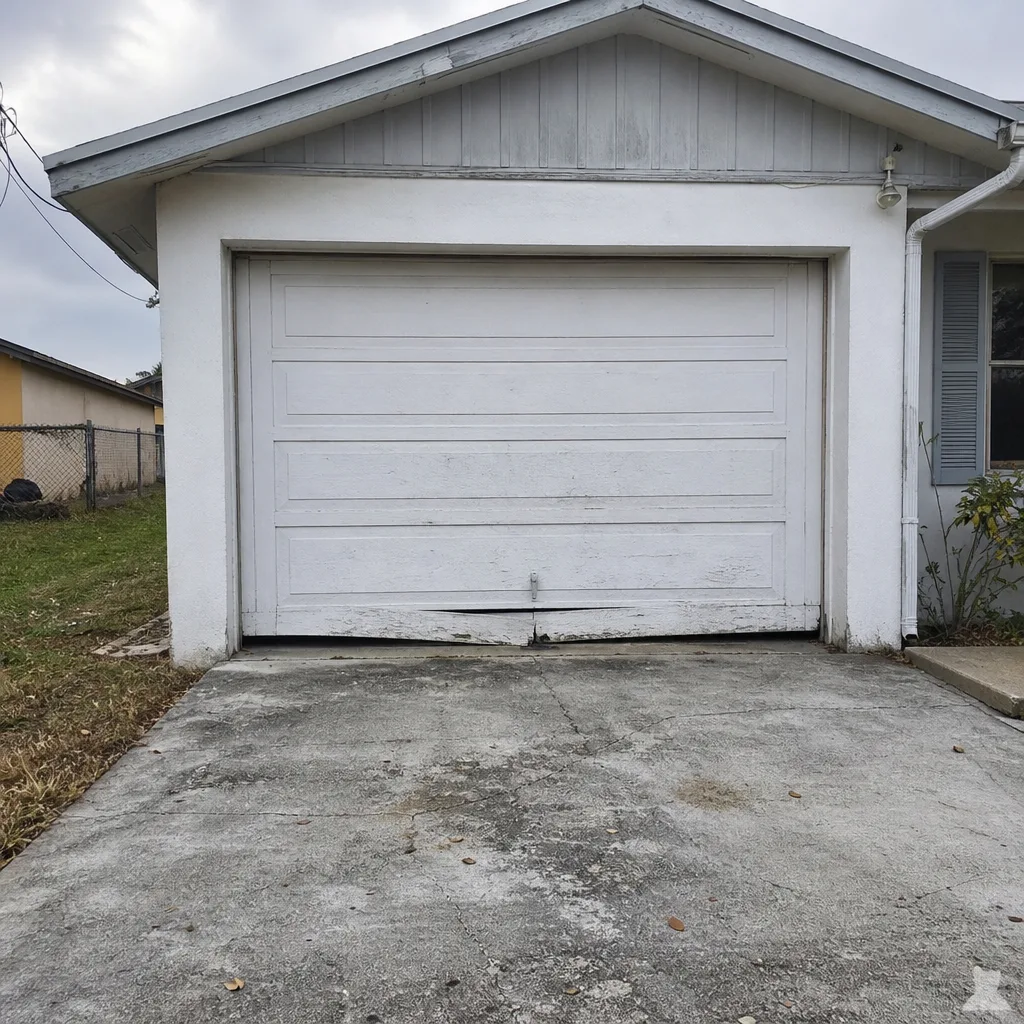 Before
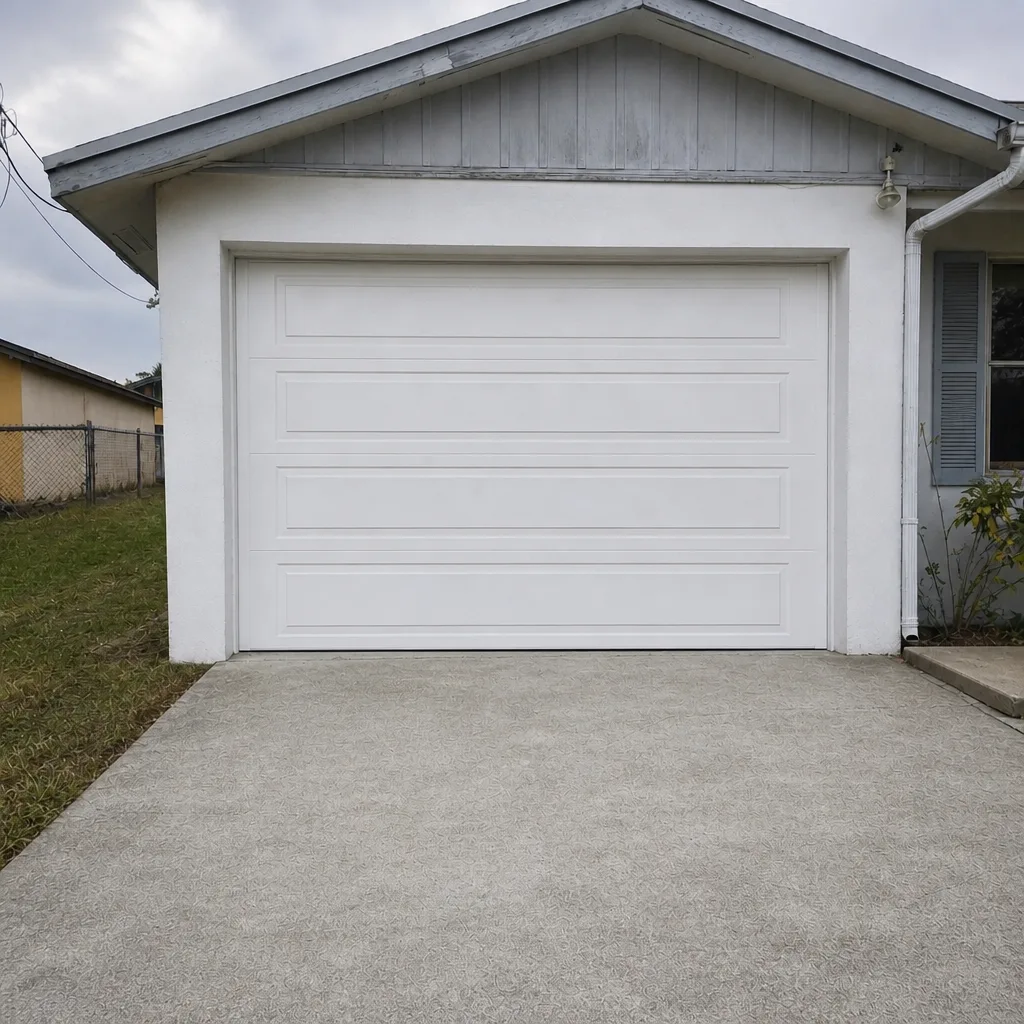 After
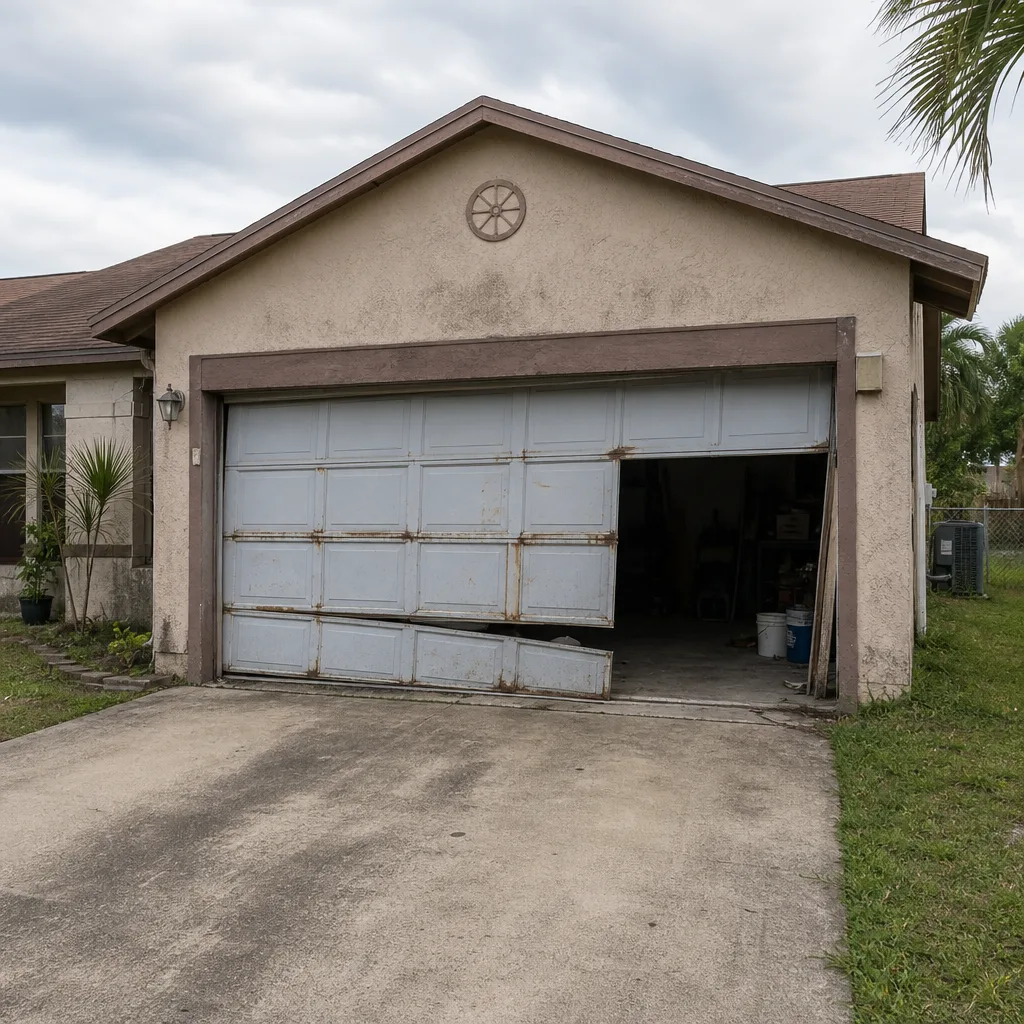 Before
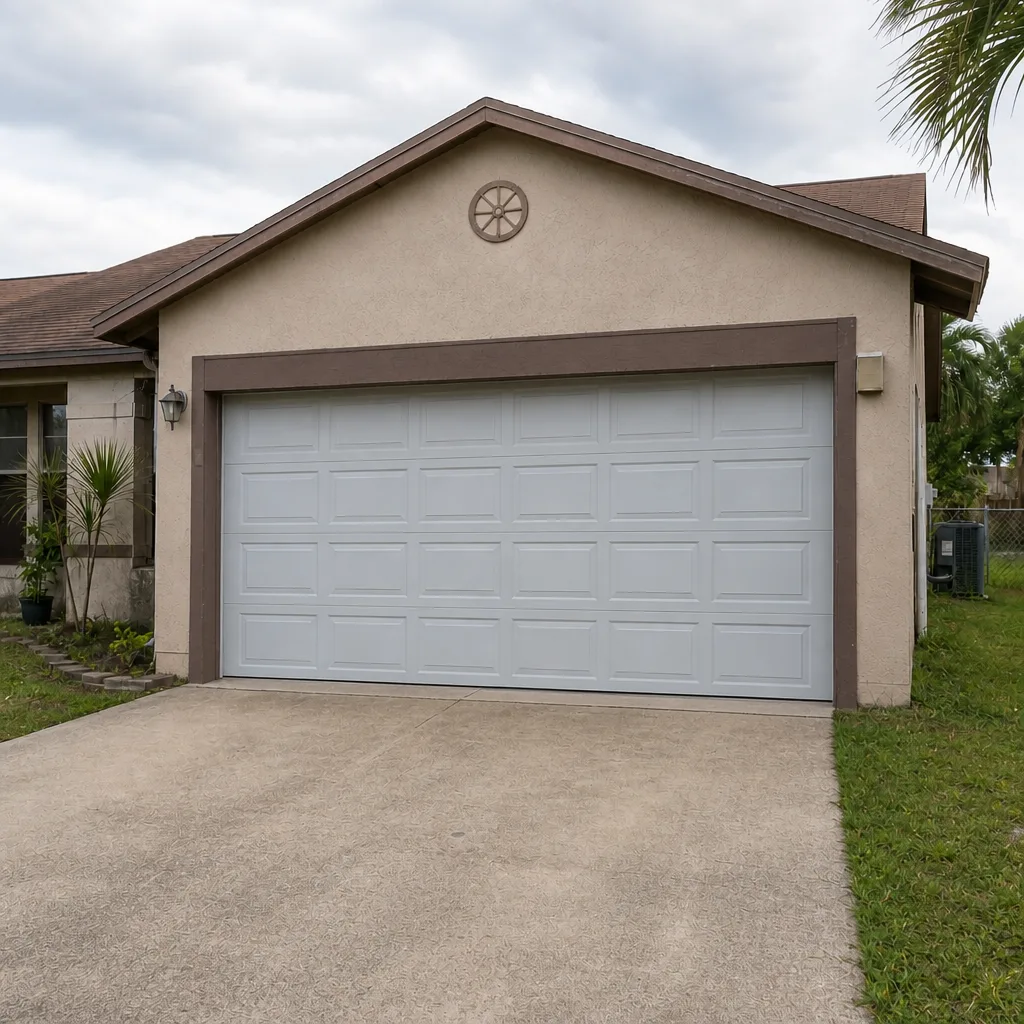 After
When to Call a Professional
Call a professional for anything that involves the springs, cables, or electrical components of the door and opener system. A broken spring, a door that drops and slams, a door that won’t open, or an opener that sparks or repeatedly trips a breaker are all in the “stop using it and call” category. Leave the door in place and keep people and vehicles clear. For less urgent issues, like a noisy door, a failing seal, or an opener that’s behaving oddly, a diagnostic visit is the right next step.
Greenacres Garage Door Repair Pros offers free estimates in Greenacres – call (844) 493-3637. We work on the brand already on your home, and spring repair is our specialty rather than a job we subcontract out. Most repairs are done in a single visit, and the written estimate is the price before any work starts. The estimate is free, and you’ll know what’s involved before we begin.
Frequently Asked Questions
Yes, the door has to meet Florida Building Code wind-load requirements for Palm Beach County, which means it needs a valid product approval covering your opening’s dimensions and the required reinforcement. A door sold without that approval isn’t compliant, even if it’s a strong door otherwise. If you’re unsure what your home requires, the county building department can confirm, and the written estimate on any door we quote will spell out the approval documentation.
It depends on whether the garage is attached to conditioned space. If the garage shares walls with the house, insulation can slow heat transfer and ease the AC load. If the garage is detached or uncooled, the insulation mostly affects garage comfort and noise rather than your home’s energy use, so treat energy savings as a bonus rather than the main reason. A written estimate showing both options helps you compare.
Spring repair is priced per spring, and the written estimate sets the final price before any work begins. A torsion spring replacement is a fixed-scope job, and a matched pair usually gets replaced together. Call (844) 493-3637 for a free estimate on your specific door and spring setup. We answer 24/7.
Same-day service is often possible, and we dispatch crews Sunday through Friday, 7am to 7pm. If you call outside that window, your request is booked into the next opening. Call (844) 493-3637. We answer 24/7.
The local professional we connect you with is licensed and insured as Florida requires. Our technicians have up to 10 years of experience working on garage doors, openers, and springs, and we service every major residential brand. The written estimate comes before any work starts, and the price you agree to is the price.
We work on all eight of the brands you’ll find on residential homes here, including Chamberlain, Genie, Clopay, Amarr, LiftMaster, Wayne Dalton, Craftsman, and Raynor. That means we fix the opener or door already on your home rather than steering you toward a brand switch. For garage door repair, Greenacres Garage Door Repair Pros bring the right parts for the brand and the door.
The Bottom Line
Garage doors in Greenacres live in a different environment than the one most door guides assume. Wind-load requirements, humidity, UV exposure, and frequent lightning shape which doors last and which openers survive. Buy a door with a valid product approval for your opening size, don’t overpay for insulation that won’t affect your cooling costs, and protect your opener with whole-home surge protection. When a spring or opener fails, don’t assume the whole door needs replacing; a repair-first approach usually gets you back to a working door for far less. Keep the springs and electrical work for a professional, and call us when you need a straight diagnosis.
If your door is stuck, noisy, or overdue for a look, reach out to Greenacres Garage Door Repair Pros for a free estimate. We handle garage door repair, garage door opener repair, and garage door spring repair across Greenacres. Call (844) 493-3637. We answer 24/7. Fast dispatch from 7am to 7pm, Sunday through Friday.
Written by the team at Greenacres Garage Door Repair Pros.